
Intermittent Fasting: The Complete Science-Backed Guide for Beginners
Learn how intermittent fasting works, the different methods (16:8, 5:2, OMAD), proven health benefits, who should avoid it, and practical tips to get started — backed by 99+ clinical trials.
Intermittent fasting (IF) has become one of the most popular health trends in the world — and for good reason. Unlike traditional diets that tell you what to eat, IF focuses on when you eat. By cycling between periods of eating and fasting, your body triggers a cascade of metabolic changes that go far beyond simple calorie reduction.
But with so many methods, conflicting headlines, and bold claims floating around, it’s hard to know what’s actually supported by science.
This guide breaks down everything you need to know — what IF is, how it works at a biological level, which method is right for you, and how to start safely — all backed by peer-reviewed research, including a landmark 2025 meta-analysis of 99 randomized controlled trials.
What Is Intermittent Fasting?
Intermittent fasting is an eating pattern that cycles between defined periods of fasting and eating. It doesn’t restrict specific foods — instead, it restricts the timing of when you eat.
During fasting windows, you consume only water, black coffee, or unsweetened tea. During eating windows, you eat normally (ideally, nutrient-dense foods).
The core idea is simple: by extending the body’s natural overnight fast, you allow metabolic processes — like fat burning, cellular repair, and hormone optimization — to activate more fully.
Key distinction: IF is not a diet in the traditional sense. It’s a meal-timing strategy. It tells you when to eat, not what to eat. However, the quality of food you eat during your eating window still matters significantly.
How Does Intermittent Fasting Work? The Metabolic Switch
The central mechanism behind IF is called metabolic switching — the point where your body shifts from using glucose (from food) as its primary fuel to burning stored fat instead.
Here’s what happens in your body during a fast:
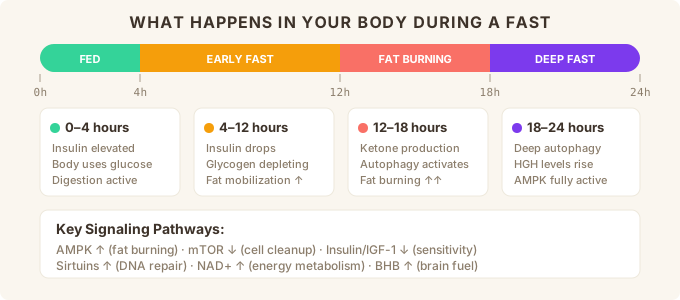
This process is called the metabolic switch. When liver glycogen stores deplete — typically around 12 hours into a fast — your body starts breaking down stored fat into fatty acids, which the liver converts into ketone bodies (primarily beta-hydroxybutyrate, or BHB).
BHB isn’t just fuel. It’s a signaling molecule that upregulates BDNF (brain-derived neurotrophic factor), promotes mitochondrial repair, and enhances cellular stress resistance.
A 2025 paper in Nature Metabolism proposed that IF benefits come not from fasting alone, but from the cyclic alternation between fasting (stress-response activation) and feeding (growth and repair). This cycling — called cyclic metabolic switching — appears to be what produces the therapeutic effects.
Types of Intermittent Fasting
There are several proven IF methods. The right one depends on your lifestyle, goals, and experience level.
16:8 — Time-Restricted Eating
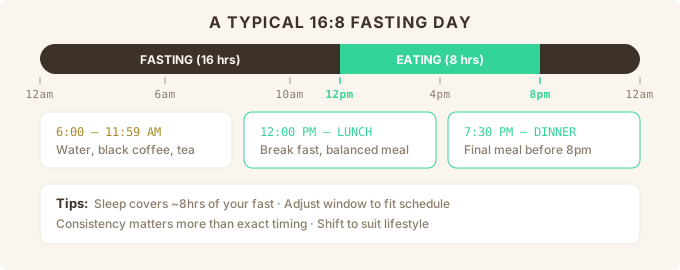
Fast for 16 hours, eat within an 8-hour window. Most people skip breakfast and eat from noon to 8 PM.
This is the most popular and beginner-friendly method. It’s easy to maintain long-term and has the most research behind it among time-restricted eating approaches.
5:2 Diet
Eat normally 5 days per week. On 2 non-consecutive days, restrict calories to 500–600. You choose which days to fast, offering high schedule flexibility.
A 2024 Lancet umbrella review found high-quality evidence that the 5:2 diet specifically reduces LDL cholesterol.
Alternate Day Fasting (ADF)
Alternate between normal eating days and fasting days (0–500 calories). Modified ADF allows 25% of normal caloric intake on fasting days.
The 2025 BMJ meta-analysis of 99 trials found ADF was the only IF method to show statistically significant benefit over continuous calorie restriction for weight loss.
4:3 Method
Eat normally 4 days, restrict calories by ~80% on 3 non-consecutive days. A 2025 University of Colorado randomized controlled trial found this produced 7.6% body weight loss at one year vs. 5% with daily calorie restriction — plus greater improvements in blood pressure, cholesterol, and blood sugar.
Eat-Stop-Eat (24-Hour Fasts)
One or two full 24-hour fasts per week (e.g., dinner to dinner). Eat normally on other days. Best for experienced fasters.
Warrior Diet (20:4)
Fast for 20 hours, eat within a 4-hour window. A 2022 randomized trial found a 37% reduction in 24-hour insulin with 4-hour eating windows.
OMAD (One Meal a Day)
All daily nutrition consumed within a 1–2 hour window. This is the most extreme common form of IF. Most healthcare professionals advise caution and medical supervision.
Which Method Should You Choose?
| Method | Weight Loss | Adherence | Best For |
|---|---|---|---|
| 16:8 | Moderate (3–5%) | High | Beginners; daily routine |
| 5:2 | Moderate (4–5%) | High | Flexible schedules; cholesterol |
| ADF | High (3–8%) | Moderate | Max weight loss; metabolic syndrome |
| 4:3 | High (7.6% at 1yr) | Moderate | Structured aggressive loss |
| 20:4 | High | Low | Advanced; liver fat reduction |
| OMAD | High | Low | Advanced only; medical supervision |
The most effective IF method is the one you can actually sustain. The 2025 BMJ meta-analysis found that the degree of weight loss from ADF, 5:2, and 16:8 were not statistically different from one another across studies.
Proven Health Benefits of Intermittent Fasting
Research across hundreds of clinical trials has linked IF to significant improvements across multiple health markers.
Weight and Fat Loss
This is the most well-documented benefit. Across studies, IF produces an average of 4.3% body weight loss over 2–12 weeks, translating to roughly 7–11 pounds over 10 weeks. The 2025 BMJ meta-analysis confirmed that all IF strategies reduce body weight compared to unrestricted eating.
The weight loss comes primarily from two mechanisms: an unintentional calorie deficit (compressed eating windows naturally reduce intake by ~650 calories/day in some studies) and enhanced fat oxidation during the fasting state.
Insulin Sensitivity and Blood Sugar
IF consistently improves markers of insulin resistance. Studies show an average reduction of 13.25 units in fasting insulin and meaningful decreases in HOMA-IR (insulin resistance measure). A 2025 Endocrine Society study found that IF showed greater advantages than continuous calorie restriction for people with type 2 diabetes — better fasting glucose reduction, improved insulin sensitivity, and higher adherence rates.
Heart Health
Modified ADF was found most effective (with high/moderate certainty evidence) for reducing systolic and diastolic blood pressure, weight, and waist circumference. The 5:2 diet specifically reduced LDL cholesterol and triglycerides.
Autophagy — Cellular Cleanup
During fasting, your cells activate autophagy — a process where damaged components are broken down and recycled. Think of it as your body’s built-in cleanup and repair system. Autophagy is triggered through AMPK activation when glucose availability drops, and is enhanced by reduced mTOR signaling.
In humans, significant autophagy likely begins between 16–48 hours of fasting. Individuals on low-carb diets may enter autophagy sooner.
Reduced Inflammation
IF significantly reduces key inflammatory markers including IL-6, C-reactive protein, and IL-1-beta. The mechanism involves inhibition of the NLRP3 inflammasome — a key driver of chronic inflammation.
Brain Health
Fasting upregulates BDNF, which promotes neuroplasticity and new brain cell growth. The ketone body BHB specifically promotes mitochondrial repair in neurons and enhances synaptic plasticity. Early human trials show improvements in cognition and inflammatory biomarkers related to neurodegenerative conditions.
Liver Health
For people with non-alcoholic fatty liver disease (NAFLD), IF shows promising results. MRI scans demonstrated a 14% reduction in liver fat within just 8 weeks of 20:4 fasting.
Gut Microbiome
IF increases microbial diversity and enriches beneficial bacteria like Akkermansia muciniphila and Lactobacillus. A 2024 Nature Communications study found that protein pacing with IF improved gut health and reduced visceral fat compared to calorie restriction alone.
A Typical 16:8 Fasting Day
Here’s what a practical 16:8 schedule looks like:
What to Eat During Your Eating Window
IF doesn’t restrict what you eat, but the quality of your food directly impacts your results. Here’s how to structure your eating window:
Breaking Your Fast (First Meal)
Start with an easily digestible, moderate portion. Prioritize protein, healthy fats, and fiber. Good options: eggs with avocado, Greek yogurt with berries, or a balanced bowl with lean protein and vegetables.
Ideal Food Categories
- Protein (aim for 1.6–2.2g per kg of body weight daily): Lean meats, fish, eggs, legumes, tofu, Greek yogurt. Distribute protein evenly across meals — research shows this supports greater muscle protein synthesis than loading it all into one meal.
- Healthy fats: Avocado, olive oil, nuts, seeds, fatty fish (salmon, mackerel)
- Complex carbohydrates: Sweet potatoes, quinoa, brown rice, oats, whole grain bread
- Fiber-rich vegetables: Leafy greens, broccoli, cauliflower, bell peppers, Brussels sprouts
- Fruits: Berries, apples, citrus — high in antioxidants and fiber
Foods to Limit
- Processed and ultra-processed foods
- Sugary beverages and refined carbohydrates
- Fried foods and trans fats
- Excessive alcohol (impairs recovery and negates fasting benefits)
Protein matters. A 2024 Clinical Nutrition study found that short-term IF does not impair muscle protein synthesis rates when adequate protein is consumed. The key is hitting your daily protein targets — not when you eat it.
Who Should Avoid Intermittent Fasting
IF is not appropriate for everyone. The following groups should avoid IF or only practice it under medical supervision:
Do not practice IF if you are:
- Pregnant or breastfeeding — increased nutritional demands
- Under 18 — growing bodies need consistent nutrition
- Have a history of eating disorders — IF can trigger or worsen disordered eating patterns
- Type 1 diabetic or insulin-dependent — risk of dangerous hypoglycemia
- Taking medications that require food (blood thinners, blood pressure medications, diuretics)
- Underweight — further weight loss can compromise immune function and bone health
- On GLP-1 receptor agonists (Ozempic, Wegovy) — combined appetite suppression can lead to dangerously low caloric intake
Always consult your doctor before starting IF, especially if you have any pre-existing medical conditions.
A Note on Women and IF
Research on women and IF is notably limited. Out of 71 studies analyzed in one Harvard review, only 13 included women at all. Available data suggests IF may reduce androgens in premenopausal women with obesity (potentially benefiting PCOS), but DHEA levels dropped approximately 14% during 8-week time-restricted eating studies. Women — especially those who are perimenopausal — should monitor energy levels, menstrual regularity, and overall wellbeing closely.
10 Practical Tips for Beginners
-
Start with 12 hours. Begin with a 12-hour fast (7 PM to 7 AM) and extend by 30–60 minutes every few days until you reach 16 hours.
-
Pick the 16:8 method first. It’s the most sustainable and well-studied starting point.
-
Align with your sleep. Most people find it easiest to fast overnight and skip breakfast. Sleep naturally covers 7–8 hours of your fast.
-
Stay hydrated. Drink plenty of water throughout the day. Black coffee and herbal tea are fine during fasting windows.
-
Plan meals in advance. Having nutrient-dense meals prepped reduces the temptation to break your fast with processed food.
-
Keep a consistent schedule. Eating at roughly the same times each day helps your circadian rhythm adapt.
-
Pair with moderate exercise. Light to moderate activity is fine during fasting. Save intense workouts for eating windows initially.
-
Prioritize protein. Aim for 1.6–2.2g per kg of body weight daily, distributed across your meals.
-
Listen to your body. If you feel dizzy, nauseous, or extremely hungry, adjust your schedule. Small variations in timing are perfectly fine.
-
Give it 2–4 weeks. Initial hunger pangs typically subside within the first week as your body adapts. Full adaptation may take 4–6 weeks.
Common Mistakes to Avoid
Overeating during eating windows. Assuming IF is a license to eat anything in unlimited quantities. You’ll still gain weight if you consistently exceed your calorie needs.
Neglecting protein. When protein intake is inadequate, research shows most weight loss comes from muscle rather than fat. This undermines your metabolism long-term.
Starting too aggressively. Jumping straight into 20:4 or OMAD without building up gradually leads to burnout, irritability, and quitting.
Ignoring electrolytes. During longer fasts (18+ hours), sodium, potassium, and magnesium levels can drop. A pinch of salt in water or an electrolyte supplement helps.
Breaking your fast with junk. Refined carbs and sugary drinks spike insulin and negate many of the metabolic benefits of fasting.
Fasting while chronically stressed or sleep-deprived. Elevated cortisol combined with fasting stress can be counterproductive. Fix sleep and stress management first.
Skipping resistance training. Exercise — especially resistance training — is essential to preserve lean muscle mass during any form of calorie restriction.
What the Latest Research Says (2024–2025)
The science of intermittent fasting is evolving rapidly. Here are the most significant recent findings:
2025 BMJ Meta-Analysis — The largest analysis to date (99 RCTs, 6,582 adults) confirmed all IF strategies reduce body weight compared to unrestricted eating. Alternate Day Fasting was the only IF form showing statistically significant benefit over traditional calorie restriction, with a mean additional weight loss of 1.29 kg.
2025 Nature Metabolism — Proposed the “cyclic metabolic switching” theory, explaining that IF benefits arise from the alternation between stress-response pathways (fasting) and growth pathways (feeding), not from fasting alone.
2025 University of Colorado RCT — The 4:3 method produced 7.6% body weight loss at one year versus 5% with daily calorie counting, with superior improvements in blood pressure, total cholesterol, fasting glucose, and HbA1c.
2025 Endocrine Society (ENDO 2025) — IF showed particular advantages for type 2 diabetes management, with better fasting glucose reduction and higher adherence rates compared to continuous restriction.
2024 Lancet Umbrella Review — High-quality evidence confirmed TRE reduces weight, fat mass, fasting insulin, and HbA1c in overweight/obese adults. The 5:2 diet specifically reduced LDL cholesterol.
2024 Clinical Nutrition — Short-term IF does not impair muscle protein synthesis when adequate protein is consumed, directly addressing concerns about muscle loss.
Important context: A 2025 ChronoFast study found that time-restricted eating without calorie reduction produced no significant metabolic improvements, suggesting that much of IF’s benefit comes from the natural calorie deficit it creates — not timing alone. The practical takeaway: IF works partly because it makes eating less easier, not because meal timing is magic.
The Bottom Line
Intermittent fasting is a well-studied, flexible approach to improving body composition and metabolic health. The evidence from 99+ randomized controlled trials supports its effectiveness for weight loss, insulin sensitivity, cardiovascular health, and cellular repair.
The best approach for most beginners is the 16:8 method — it’s simple, sustainable, and backed by solid evidence. Start gradually, prioritize protein and whole foods during your eating window, stay hydrated, and give your body 2–4 weeks to adapt.
IF isn’t magic, and it isn’t for everyone. But for the right person with the right approach, it’s one of the most practical tools available for sustainable health improvement.
This article is for educational purposes only and does not constitute medical advice. Always consult a qualified healthcare provider before making changes to your diet, especially if you have pre-existing health conditions or take medications.